Mooring lines
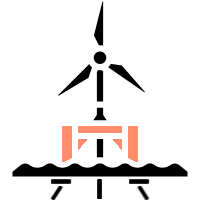
Floating structure
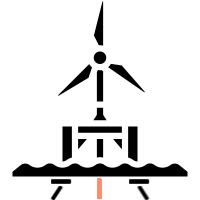
Dynamic cable
Tower interface
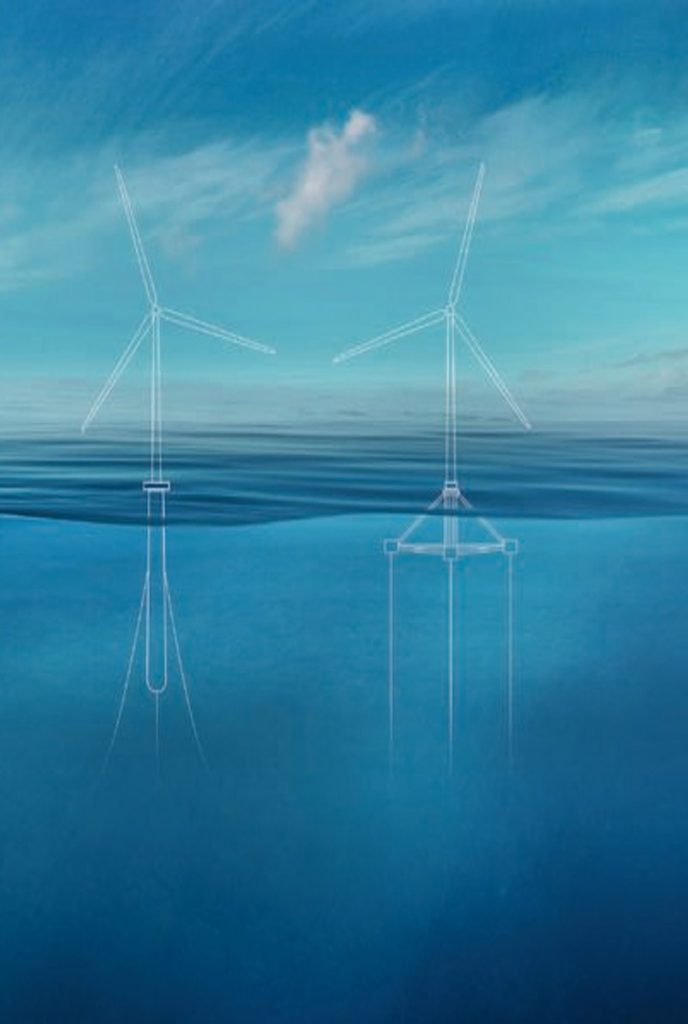 Structural monitoring system for FOWT demonstrative units.
Data-driven deep knowledge, technical insights, multivariable analyses, validation and calibration of virtual models.
We adapt SIMEWind technology to barge, semi-submersible, spar or TLP type substructures; concrete, steel or hybrid.
Accurately measures and quantifies.
- The dynamics and motions of the floating substructure and relative deformations.
- The distribution of aerodynamic and meteoceanic loads – forces and moments – at critical interfaces, tower, floating substructure.
- Mooring line forces
- Real stresses at interfaces or critical points of the different modules: Floater structure, tower interface, welds, lugs and mooring lines, etc..
Analyses and relates.
- External loads and their effect on the structural and hydrodynamic response of all elements and modules of the wind asset.
Validates through real data and structural analysis
Structural and hydrodynamic virtual models, which are key tools to provide physical interpretation to the acquired data. SIMEWind allows to correlates the models with real data to make them representative to be used as validation tools in the design and development phase.
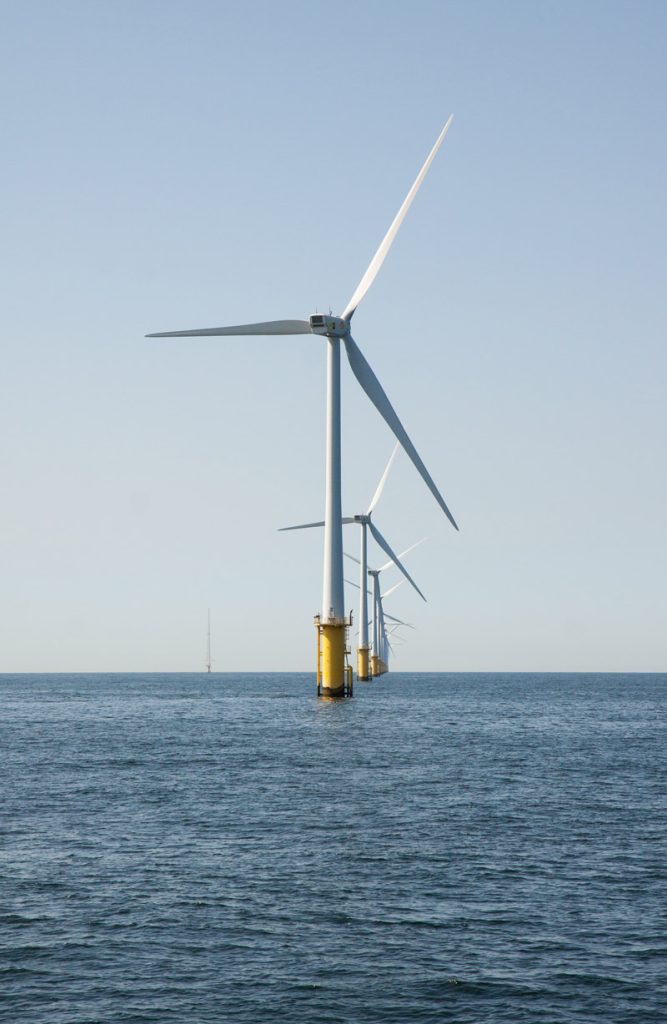 FOWT Structural Health Monitoring system scalable to commercial offshore wind farms. It records, tracks and evaluates loads, fatigue behavior, and hydrodynamic response to provide with the structural insights and remaining lifetime.
Inalia is developing a solution based on minimal sensor data, simplified hydrodynamic models, trained artificial neural network (AI) and anomalies databases that provides the analyses and diagnoses of the structural health of floating subsystems.
SIMEWind SHM could help to mitigate technical uncertainties reducing costs, while enhancing health and safety measures, if developed based on data-driven information and knowledge provided by the monitoring systems on demonstrative units.
Data measurements
Minimum sensor data from Inertial Measurement Unit IMU, GPS and total tower interface loads, as well as external conditions data are used to get position, dynamics and total loads on floater.
This makes SIMEWind a cost-effective solution, with no durability issues, and SCADA independent.
Total loads prediction
This data combined with simplified real time hydrodynamic models + Artificial Inteligent tools is used to predict total loads on moorings and substructure interfaces.
Health Analysis & working anomalies early detection.
SIMEWind combines load information, structural models, learning anomalies databases & trained artificial neural network (AI) to analyse the structural condition of moorings, floaters to detect working anomalies, prevent risk situations or do predictive maintenance.